Compare South Carolina custom home builders before you sign
206 custom home builders across 28 South Carolina areas, sorted from production builders, with what each one actually does — your lot or theirs, in-house design, waterfront work, pricing model, warranty — confirmed from its own website. Free, no sign-up, no sales calls.
- True custom builders separated from plan-book and production builders
- Facts confirmed on each builder’s own website
- Compare before you commit
Featured South Carolina custom home builders
SponsoredThe featured spot here is open — one business only. The State Page Featured Placement: the most-viewed page on the site.
Put your company at the top for all of South CarolinaCustom home builders by area
Pick your part of South Carolina. Every area page lists the custom builders based there and in the nearby towns, what each one does, and which ones state a state license.
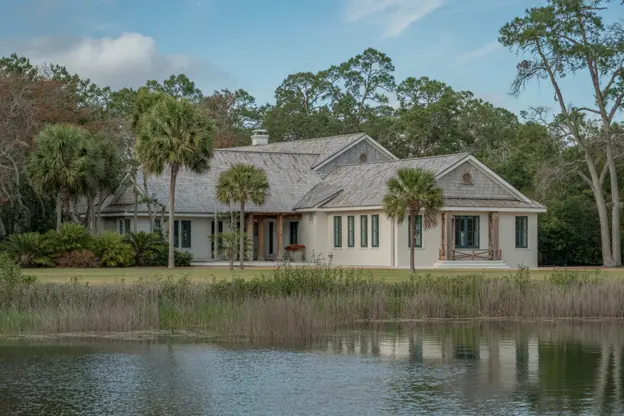
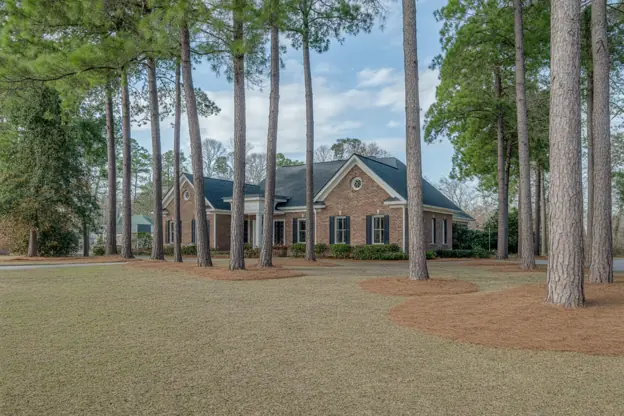
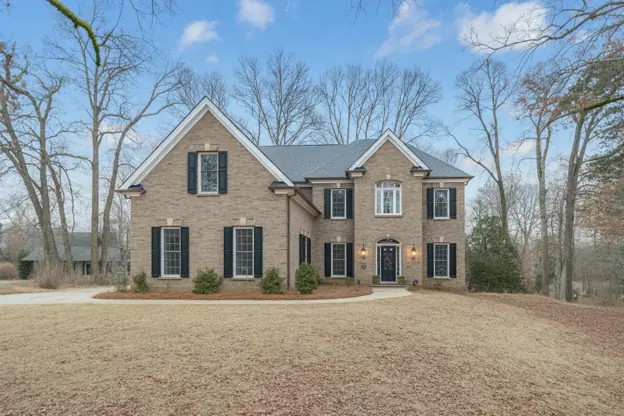
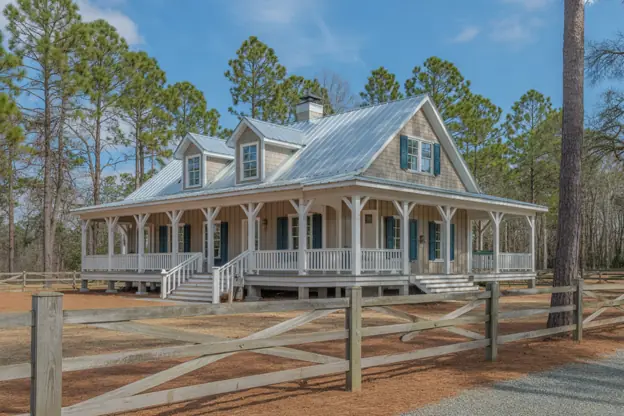
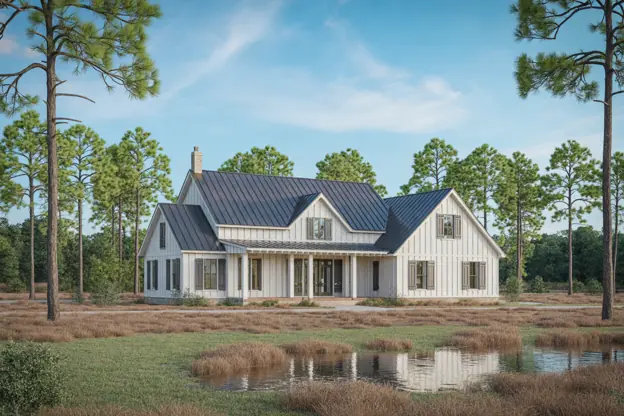
What kind of build?
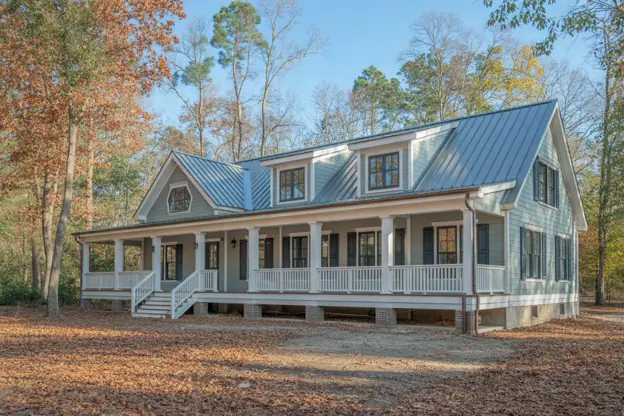
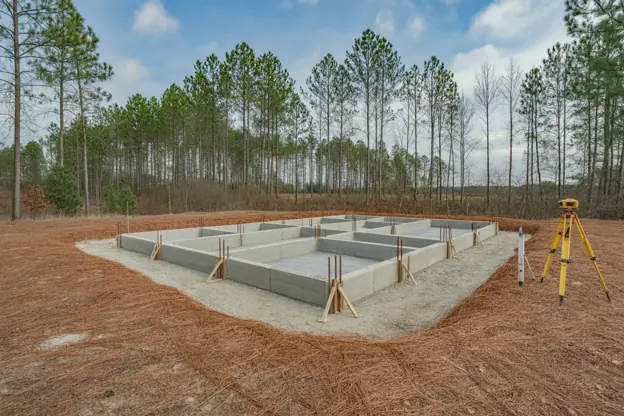
What we check before a builder is listed here
Custom, or just called custom
Every builder’s website is read for whether it builds one-off homes to the client’s plans, sells semi-custom plans, or runs production neighborhoods. Production-only companies are listed in a separate band, not mixed into the custom list.
Sixteen facts, confirmed or “not confirmed”
Builds on your lot, in-house design, waterfront and elevated construction, energy certification, pricing model, timeline, financing help, warranty, memberships and more. If the site doesn’t say, we say so.
Nothing else
No star ratings copied from other sites, no paid positions in the list, no stock renderings passed off as a builder’s work. Sponsored cards sit in a labeled band, and the list order never changes for money.
Records last checked November 3, 2026. Read the full method.
Every South Carolina area with custom home builders
Before you hire a South Carolina custom home builder
Palmetto Builder Guide is a directory of custom home builders in South Carolina, published by Local Guide Press. Every listing is pulled from public records and checked against the builder's own website.
Nothing here is a review, no builder pays to be listed or ranked, and there are no star ratings. I'm Jenna Payne, the research editor, and my job is to show what I could confirm and say plainly what I could not.
South Carolina licenses home builders at state level. The Residential Builders Commission, part of the Department of Labor, Licensing and Regulation (LLR), licenses them under Title 40, Chapter 59 of the South Carolina Code, and building a house for pay without that licence is a misdemeanor. As of November 2026 the licence is recorded here from each builder's own website rather than matched to the state file, and that distinction is spelled out in the labels section below.
Use the city pages to find builders who work in your area, then open a listing to see what was confirmed and on what date. If a listing is wrong, email editor@localguidepress.com and I'll fix it, usually within five business days.
Licensing in South Carolina: the Residential Builders Commission
South Carolina licenses residential builders statewide through the Residential Builders Commission at LLR. Section 40-59-20 defines a residential builder as one who constructs or superintends, or offers to, a residential building of not more than three floors and sixteen units, when the cost of the undertaking exceeds five thousand dollars, and section 40-59-220 says all residential builders must be licensed. The licence belongs to a person: it takes a year of supervised experience, a two-part examination, a credit report and a bond of not less than fifteen thousand dollars.
A company (LLC, corporation or partnership) practises through a Certificate of Authorization that names a licensed individual in responsible charge. Plumbers, electricians and HVAC installers hold separate licences by examination; framing, roofing, masonry, drywall and similar trades are registered without an exam and may not act as the general contractor. Verify any licence in the free LLR Licensee Lookup; only an Active status will do.
Complaints go to the Commission, which can fine, suspend or revoke but does not refund your money, and I found no homeowner recovery fund in South Carolina law. Unlicensed builders face fines of five hundred to ten thousand dollars under section 40-59-30 and may not file a mechanics' lien or sue on the contract.
What the listing labels mean
Each listing shows a small set of labels. They are facts with dates, not endorsements. License stated on site means the company's own website states that it holds a South Carolina residential builder licence, and I recorded that statement and the date I read it. It is recorded, not verified: as of November 2026 I have not matched listings against the LLR licensee file, because the bulk list has not yet arrived from the agency.
When it does, this label will be replaced by a verified-licence label with the number and match date, and listings that fail the match will say so. Until then, check the number yourself in the LLR lookup; it takes a minute. Verified by the business means someone at the company confirmed the listing's details with me by email or phone, on the date shown. It confirms details, not workmanship. Premium means the builder pays for an expanded profile with more photographs and text.
Premium never changes a listing's position; order on every page is alphabetical or by distance. Sponsored marks a clearly separated advertisement and is never mixed into the list. There are no star ratings on this site, because I do not collect reviews. Absence of a label means I found nothing either way.
Custom, semi-custom or production: what you are actually buying
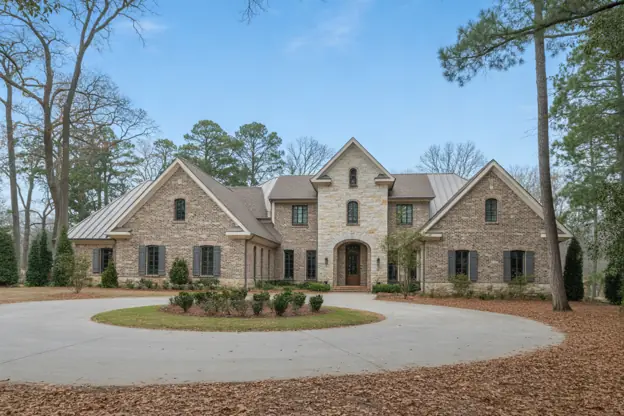
Those words are not regulated and builders use them loosely, so ask what a company actually does before comparing bids. A production builder owns the lots, builds from a fixed set of plans with option packages, and prices by list; it is fastest and cheapest per square foot because of repetition. A semi-custom builder starts from its own plan library and lets you move walls, change elevations and choose finishes within a structure it already knows; most companies that come up for "affordable custom home builders" in Greenville, Charleston and Mount Pleasant work this way.
A true custom builder builds a one-of-a-kind house from plans drawn for you, usually on your lot, under a cost-plus or negotiated fixed-price contract, and asks the most of you. Two related choices follow. Design-build means one company draws and builds under one contract; architect-led means an independent architect draws and builders bid the drawings.
Build-on-your-lot means the lot is studied first: sewer or septic, zoning, access, utilities, flood zone and any HOA review. Whatever the model, insist on drawings complete enough that two builders would build the same house, a written list of every allowance with its amount, and a change-order process that requires a signed price before work proceeds.
Lots, permits and coastal rules
Every new house in South Carolina needs a building permit from the county or city, and the builder normally pulls it under its own licence. The codes are set statewide by the Building Codes Council: as of its current list, the 2021 International Residential Code with South Carolina modifications, the 2020 National Electrical Code, and, by statute, the 2009 International Energy Conservation Code; the Council's site gives January 1, 2027 as the effective date for the 2024 editions. The slow steps come first: a septic permit from the Department of Environmental Services if there is no sewer, which depends on a site evaluation queue and without which the county will not issue the building permit; zoning sign-off; a 911 address; in some counties proof of water service.
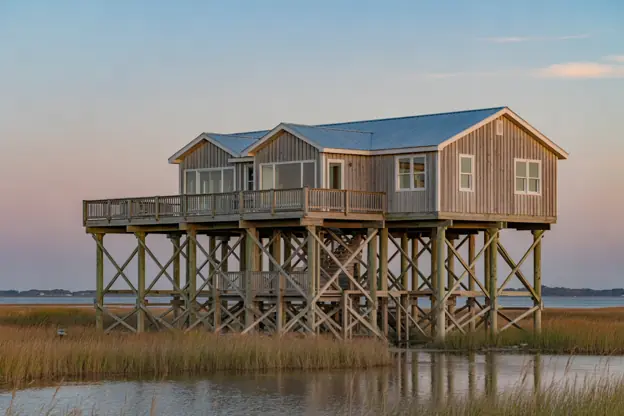
Impact fees, where a jurisdiction has adopted them under the Development Impact Fee Act, are collected at permit. On the coast, eight counties (Beaufort, Berkeley, Charleston, Colleton, Dorchester, Horry, Jasper and Georgetown) fall under Title 48, Chapter 39: any structure in a critical area needs an OCRM permit, and no new construction is allowed seaward of the beachfront baseline. Flood zones add elevation requirements, and coastal wind speeds add engineered framing and protected openings.
Get the lot's flood zone, OCRM status and design wind speed in writing before plans are drawn.
Money: construction loans, draws, allowances and lien waivers
Most custom homes use a construction-to-permanent loan: one closing, interest-only draws during the build, and conversion to a mortgage at the certificate of occupancy. The lender's builder approval is a free second check on licence and insurance, so shop lenders before signing with a builder. Whether you borrow or pay cash, pay for work in place through a draw schedule written into the contract, and collect lien waivers from the builder, its subcontractors and its suppliers with every draw.
South Carolina's mechanics' lien law gives unpaid subcontractors and suppliers a lien on your house even though your contract is with the builder; the total cannot exceed what you still owe on the contract, a lien must be filed within ninety days of the claimant's last work and sued on within six months, and filing a Notice of Project Commencement within fifteen days of starting makes remote suppliers notify you before they can reach past the builder. The statute says nothing about lien waivers or deposit limits, so both live in your contract, as do allowances; compare each one to a real quote. An owner-occupied legal residence is assessed at four percent under section 12-43-220, but only after you apply to the assessor, and new construction is added to the roll at market value and first taxed the year after completion.
Timeline and the best time to start in SC
I do not print an average build time, because the honest figure depends on the county, the lot, the house and the builder's backlog. Pre-construction, meaning design, engineering, lender approval, the septic evaluation, zoning and any HOA or OCRM review, often takes as long as the framing and dry-in together. Permit processing is usually the fast part once the paperwork is complete; Greenville County, for instance, cites a five-day processing period on its Building Safety page, while other counties publish no figure.
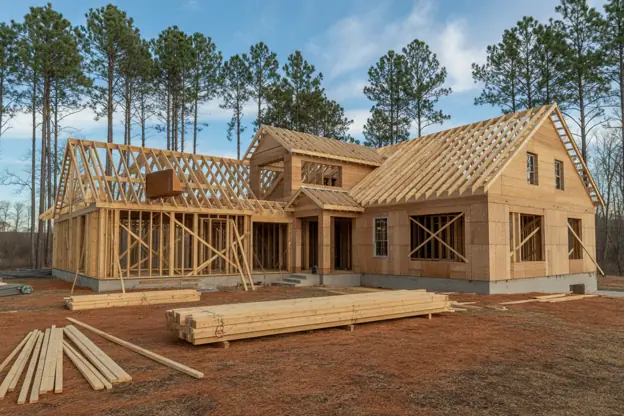
Construction from footings to certificate of occupancy typically runs most of a year for a custom house, with the finish stage (trim, cabinets, countertops, tile, fixtures, inspections and punch list) taking longer than anyone expects. Long-lead items such as windows, trusses and cabinets set the schedule, so make those selections before the foundation is poured. On weather: South Carolina builds year-round, summer storms slow excavation and concrete, and tropical systems from June through November can close a coastal site; starting site work in late winter gets the roof on before the peak of the season, but the real best time to start is when the pre-construction steps are done.
Ask every builder for the permit and certificate-of-occupancy dates of its last three houses.
What I check and what I cannot
I read each listed builder's website and record what it says about its licence, services, service area and affiliations, with the date I read it, so service details are the company's own statements. As of November 2026 the licence is recorded from that statement, not matched against the LLR licensee file; the file is on request and when it arrives I will match each listing by licensee name and Certificate of Authorization and replace the label with a verified one. Until then the LLR lookup is the live source and takes a minute.
The Verified by the business label means the company confirmed its listing details with me, nothing more. I do not visit job sites, speak to customers, collect reviews or verify workmanship, and I cannot tell you whether a builder will finish on time or on budget. Prices are absent because they go stale fast and vary by lot, county and finish level.
When a fact depends on a rule that can change, such as a statute section, a code edition or a county requirement, I date it and link the primary source; where a county's site would not open for me, the FAQ says so rather than guessing. If you find an error, email editor@localguidepress.com. Corrections are posted with the date they were made.
South Carolina home questions, answered
What is the difference between a custom, semi-custom and production home builder?
The words are not regulated, so builders use them loosely; here is what they usually mean. A production builder owns the lots, offers a fixed set of plans with limited option packages, and builds many of the same house in a subdivision; you choose from a menu. A semi-custom builder starts from its own library of plans and lets you move walls, change elevations and pick finishes within a structural envelope it already knows how to build. A true custom builder builds a one-of-a-kind house from plans drawn for you, often on a lot you already own, and the contract is usually cost-plus or a negotiated fixed price rather than a list price.
Each model trades something. Production is fastest and cheapest per square foot because of repetition. Semi-custom gives most of the look of custom at a known price. Custom gives control over everything and asks the most of you. The Related searches on this site show buyers asking for "affordable custom" builders in Greenville, Charleston and Mount Pleasant; most of those companies are semi-custom, which is not a criticism. Ask which model a builder actually runs before you compare bids.
What are allowances and change orders in a custom home contract?
An allowance is a placeholder dollar amount in the contract for an item not yet selected: lighting fixtures, tile, countertops, appliances, landscaping, and often site work. If your choices cost more than the allowance, you pay the difference; if less, you get a credit. A change order is a written amendment that changes the scope, price or schedule after the contract is signed, whether you asked for it or a site condition forced it. Together they are the usual reason a finished custom home costs more than the signed number.
Protect yourself at contract time. Ask the builder to list every allowance with its amount and what it covers (material only, or material and labor). Compare each allowance to a real quote from the supplier the builder uses; a low allowance makes a bid look cheaper than it is. Require that every change order be written, priced, signed by both parties before the work is done, and state its effect on the completion date. Keep a running total. None of this is required by South Carolina law, which is why it has to be in your contract.
Cost-plus or fixed price: which contract is better for a custom home?
A fixed-price (lump sum) contract states one price for a defined scope; the builder keeps savings and absorbs overruns, and anything outside the scope is a change order. A cost-plus contract bills you the actual cost of labor, materials and subcontracts plus a fee, either a percentage or a fixed amount; you see every invoice and carry the risk of overruns. A cost-plus contract with a guaranteed maximum price (GMP) caps your exposure while keeping the open book. In South Carolina custom work, cost-plus is common for one-off houses where the plans are still moving, and fixed price is common for semi-custom builders working from plans they have built before.
Ask these questions. On cost-plus: what counts as cost (does the builder's supervisor, truck or office overhead get billed?), what the fee percentage applies to, how often you get invoices and backup, and whether you can audit. On fixed price: what the allowances are, how change orders are priced, and whether unknown site conditions are excluded. Your construction lender will usually want a fixed price or a GMP because it must set a loan amount.
How is property tax calculated on a newly built house in South Carolina?
South Carolina taxes real property on an assessed value that is a percentage of fair market value, times the local millage. Under section 12-43-220(c) a legal residence that the owner occupies as a domicile, with up to five contiguous acres, is assessed at four percent of fair market value; other real property, including a house you do not occupy, is assessed at six percent under 12-43-220(e). The four percent ratio is not automatic: the owner must apply to the county assessor before the first penalty date for the tax year in which eligibility is first claimed, sign a certification under penalty of perjury, and the burden of proof is on the owner. Renting the house for more than seventy-two days in a year loses it.
For a new house, section 12-37-3140 adds the fair market value of improvements and additions to the property's value, and 12-37-3130 defines those to include new construction; the fifteen percent cap on reappraisal increases does not apply to new improvements, and under subsection (E) the added value is first taxed in the following tax year. Section 12-43-240 requires the county to send the assessor a copy of every building permit within ten days, so the assessor will know. Millage differs by county and school district, so the editor does not rank counties; your county auditor's office can estimate the bill for a given value.
Does a builder have to give a property disclosure on a new house in South Carolina?
Usually not the standard form. South Carolina's Residential Property Condition Disclosure Act (Title 27, Chapter 50) requires an owner selling a one-to-four-unit residence to give the buyer a written disclosure statement before the contract is signed, covering water and sewer, structural components, systems, wood-destroying insects, zoning and code matters, environmental hazards and homeowners association governance. Section 27-50-30(10) exempts transfers involving the first sale of a dwelling never inhabited, which is why a builder selling a brand-new spec house, or a custom house built under a purchase agreement, typically gives no condition disclosure. If you own the lot and hire a builder under a construction contract, there is no sale of real property at all, so the Act does not apply.
What you get instead is the contract, the plans, the permits and inspection record, the certificate of occupancy, the written warranty, and whatever the builder tells you in writing. Keep all of it; when you sell later you will owe the disclosure form yourself and the Act (section 27-50-65) makes an owner who knowingly gives false information liable for actual damages and attorney's fees.
How long does it take to build a custom home in South Carolina?
The editor does not print an average, because builders' own schedules vary too much by county, lot and house to be useful as a single number. The timeline has three parts. Before the permit: design, engineering, lender approval, septic evaluation, zoning and any HOA or OCRM review, which can take as long as the construction. Permit processing: Greenville County cites a five-day processing period as of its current notice; other counties did not publish one. Construction: from footings to certificate of occupancy, a custom house typically runs most of a year, with the final weeks of trim, cabinets, countertops and inspections taking longer than buyers expect. Production houses on prepared lots are faster because the plan, the crews and the suppliers repeat.
Ask each builder for a written schedule with milestones and the assumptions behind it (material lead times, crew availability, weather days), and for the dates its last three houses were permitted and received a certificate of occupancy. That record is the only forecast worth anything. "Fastest possible" is the wrong question; the right one is whether the builder has finished houses on the dates it promised.
What is the best time of year to start building a house in South Carolina?
South Carolina builds year-round. Winters are mild enough in most of the state that foundations and framing continue, with occasional freeze delays in the Upstate. The wet periods that matter are summer thunderstorms, which stall excavation and concrete, and tropical systems from roughly June through November, which can shut a coastal site for days and, in a bad year, pull subcontractors toward storm repair. Starting site work in late winter or early spring puts the foundation in before the summer rains and gets the roof on before hurricane season peaks; that is the conventional advice, and it is only advice.
The bigger lever is the pre-construction calendar. A septic evaluation queue, a permit submission and a lender's builder approval each take weeks you cannot compress, so the best time to start is when those are done, not when the weather looks good. Ask the builder how many weather days its schedule assumes for your county and season, and how it handles a storm closure. The editor did not find a primary source that ranks months, so treat this as experience rather than data.
How do I check out a custom home builder before hiring in South Carolina?
Do it in this order. Licence: confirm an Active residential builder licence in the LLR lookup under the individual's name, and if the company is an LLC or corporation, a Certificate of Authorization with that person as resident licensee in responsible charge. Discipline: search LLR's public Board Orders and the clerk of court index in the builder's home county. Insurance: ask for general liability and workers' compensation certificates and call the agent. References: ask for the last three completed houses, not the best three, and the permit and certificate-of-occupancy dates for each, then call the owners and ask what went wrong and how it was handled. Subcontractors and suppliers: ask who they are and whether they are paid current; a lumber yard that will not take the builder's orders is a loud signal.
Then read the contract before you fall for the model home: the allowances, the draw schedule, the change-order process, the warranty, the completion definition and what happens if either side defaults. Membership in a Home Builders Association chapter shows the builder is engaged in the trade but is voluntary and is not a licence check. No star rating on this site, or any site, replaces the steps above.
What are red flags when hiring a home builder?
The common ones: no licence number offered, or a number that belongs to someone no longer with the company; a request for a large deposit before plans or permits exist; a price quoted per square foot with no drawings; allowances that are far below the real cost of the items; a refusal to put the draw schedule and change-order process in the contract; reluctance to provide insurance certificates or references from recent, ordinary projects; suppliers or subcontractors who mention being paid late; a suggestion to skip a permit or an inspection; and pressure to sign today to "hold pricing." One more that is specific to South Carolina: a builder who does not know what a Notice of Project Commencement or a lien waiver is has not been protecting its previous clients from liens.
None of these alone proves a problem, and good builders are busy and can be slow to return calls. The pattern matters. If the builder's answers to the licence, insurance and reference questions are complete and verifiable, most of the rest can be negotiated in the contract. If those three are evasive, stop there.
What should a custom home building contract include?
South Carolina does not prescribe the contents of a residential construction contract, so everything protective has to be written in. At minimum: the parties, with the builder's licence number and the resident licensee for a firm; the plans and specifications by date and revision, attached; the price and the model (fixed, cost-plus with fee, or GMP); every allowance, listed with amount and what it covers; the draw schedule and what each draw requires (inspection, invoices, lien waivers); the change-order procedure, in writing, priced and signed before work; the start date, the substantial-completion date and how delays are handled; what counts as complete (certificate of occupancy plus a signed punch list); a holdback until the punch list is done; the warranty terms and claim procedure; insurance each party carries; who files the Notice of Project Commencement; dispute resolution; and what happens if either side defaults.
A South Carolina construction attorney reviewing the contract before signing is the cheapest insurance in the whole project. Builders often use a form from their trade association or their own; both are negotiable, and a builder who will not discuss changes is telling you how change orders will go later.